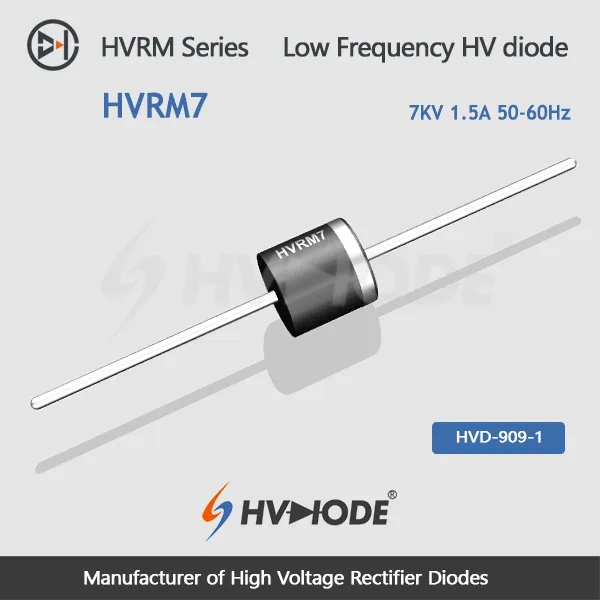
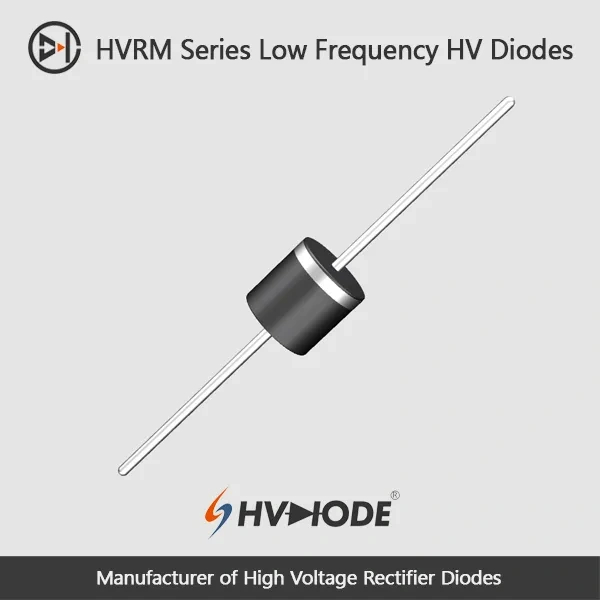
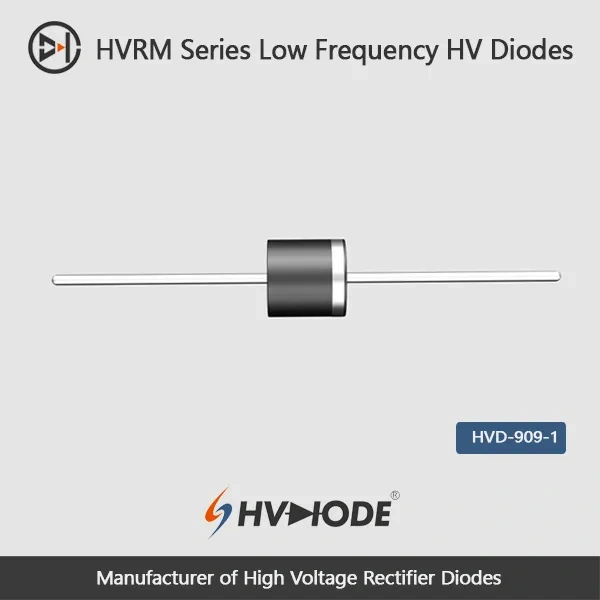
• HVRM7- Low frequency high voltage diode 7KV,1.5A,50-60Hz
  • HVRM7- Low frequency high voltage diode 7KV,1.5A,50-60Hz
  • HVRM7- Low frequency high voltage diode 7KV,1.5A,50-60Hz
  • HVRM7- Low frequency high voltage diode 7KV,1.5A,50-60Hz
  • HVRM7- Low frequency high voltage diode 7KV,1.5A,50-60Hz
  • HVRM7- Low frequency high voltage diode 7KV,1.5A,50-60Hz
  • HVRM7- Low frequency high voltage diode 7KV,1.5A,50-60Hz
  • HVRM7- Low frequency high voltage diode 7KV,1.5A,50-60Hz

HVRM7- Low frequency high voltage diode 7KV,1.5A,50-60Hz

Products Main features:
1、Axial leaded connection.
2、High thermal conductivity epoxy compound molding.
3、Excellent surge current resistance
4、Special high temperature resistant chip
  • HVRM7- Low frequency high voltage diode 7KV,1.5A,50-60Hz
  • HVRM7- Low frequency high voltage diode 7KV,1.5A,50-60Hz
  • HVRM7- Low frequency high voltage diode 7KV,1.5A,50-60Hz
  • HVRM7- Low frequency high voltage diode 7KV,1.5A,50-60Hz
  • Desciption

  • data sheet

  • Installation Guide

 HVRM7  Low frequency high voltage diode Data Sheet 
 Parameter Symbol Unit Test Conditions Value
 Repetitive Peak Backward Voltage Vrrm KV Ta=25℃  Ir=2.0μA 7
 Peak Working Backward Voltage Vrwm KV Ta=25℃  Ir=2.0μA 7
 Average Forward Current If(AV) A 50Hz Half-sine Wave , Resistance load @Tbreak=50℃ 1.5
 Backward Recovery Time Trr nS   --
 Surge Forward Current Ifsm A 0.01S @ Half-Sine wave  50Hz 150
 Operating Ambient Temperature Ta ℃   -55~+175
 Storage Temperature Tstg ℃   -55~+150
 Forward Peak Voltage Vfm V   ≥8.5
 Backward Peak  Current Irrm1 μA @ Ta=25℃ VRM=VRRM 2.0
Irrm2 μA @ Ta=100℃ VRM=VRRM 20.0
 Absolute Maximum Ratings & Electrical Characteristics


Product Overview

HVRM7 is a 7KV, 1.5A low frequency high voltage diode for 50-60 Hz rectification in high-voltage supplies and rectifier assemblies. It uses an axial leaded connection, so it can sit through a board or be wired into a stack, and the body is molded in a high thermal conductivity epoxy compound that carries heat away from the chip. A high-temperature resistant chip and a surge-rated junction let this diode ride through the inrush and fault currents that line-frequency rectifiers meet. The part belongs to the HVRM-Series of power frequency diodes, a family that runs from 5KV to 15KV, and it ships with a published data sheet so every rating can be checked against your circuit.

Key Features

  • Axial leaded connection — through-hole leads suit stacked assemblies where several high voltage diodes sit in series, and they let the lead pitch match your own layout instead of the other way round.
  • High thermal conductivity epoxy molding — the molded body moves heat away from the junction, which keeps the chip temperature in check while the part carries its rated average forward current.
  • Excellent surge current resistance — the junction is built to absorb short, high-current surges instead of failing on the first one, which matters in supplies that see inrush at switch-on.
  • Special high temperature resistant chip — the chip is chosen to keep working at the top of the operating range, useful inside sealed modules, oil-filled tanks and equipment that runs hot for long periods.

Operating Environment

  • Insulating oil — the recommended medium. The oil surrounds the body and suppresses surface discharge across the epoxy, and it also carries heat away from the lead joints.
  • Insulating gas — also recommended for sealed high-voltage assemblies where oil is impractical. Keep the gas dry and the mounting area free of dust and flux residue.
  • Secondary packaging — potting or sealing the diode inside a module works, but the enclosure has to handle heat well, because it holds warmth close to the body and puts more demand on the component's electrical characteristics.
  • Open air — workable with forced air cooling. A small body in still air sheds heat slowly and discharges more easily across its surface, so mount high voltage diodes with insulated electrodes at both ends.

Technical Support & Model Matching

Selection support starts before you order. Our technical team reviews your working voltage, forward current, surge and thermal conditions against the published datasheets, then recommends the closest high-voltage diode and confirms the matching part number. We also guide you through installation and insulation considerations, and help troubleshoot issues during qualification or after delivery. Suly Electronics manufactures these diodes directly, supplies them in bulk, and keeps answering technical questions for the parts you already use.

FAQ

Q1. Is this diode suitable for high-frequency switching?

No — this is a low-frequency part designed for 50-60 Hz rectification, and its recovery time is left unspecified because line frequency is the intended working condition. If your circuit switches at kilohertz or faster, step up to one of our fast recovery or ultra fast recovery high voltage diode families.

Q2. How does the 7KV model differ from the 6KV and 8KV versions?

They are consecutive steps in the same family. The 6KV part carries 2 A of average forward current with a larger surge rating; this 7KV model trades some of that current for more blocking voltage at 1.5 A; the 8KV version holds 1.5 A while raising the voltage again. All three share the molded construction and the same document set, with the differences sitting in the voltage rating and the current each one carries.

Q3. Can it be used in a bridge rectifier or a rectifier stack?

Yes. This is a power-frequency rectifier diode, and it suits bridge legs and series stacks where several high voltage diodes work together to hold the string voltage. Because it is a single diode, the stack design determines how the voltage divides. Keep the leads short and space the string so each body can shed heat rather than trapping it in the middle.

Q4. How should the leads be handled during assembly?

Form the leads at a comfortable distance from the body rather than right at the seal, and avoid bending the same spot back and forth. Keep the body and the lead entry clean before any coating goes on — finger oils and flux residue left on the surface are a common cause of discharge in high-voltage work.

Q5. Does the 50 Hz rating also cover 60 Hz operation?

The part is specified for 50-60 Hz operation, and its ratings are measured on a 50 Hz half-sine wave with a resistive load. Running it on a 60 Hz supply sits inside the intended use; check the peak and surge conditions against your load in the same way you would at 50 Hz.

Q6. Can I use this model as a replacement for a failed diode?

Start by matching the two backward voltage ratings, the average forward current and the lead connection against the data sheet, then check that the body outline and lead pitch fit your board or stack. If the failed part is hard to identify, send a photo or drawing and our engineers will compare it with the sheet.
The selection of high-voltage diodes is closely related to their usage environment。

1. Used in insulating oil. (Recommended)
2. Used in insulating gases. (Recommended)
3. Secondary packaging use. (High requirements for heat dissipation and other parameter performance of components)
4. Use in exposed air or add air cooling. (If the size of the high-voltage diode is small, it is easy to discharge, and the heat dissipation performance is average.)

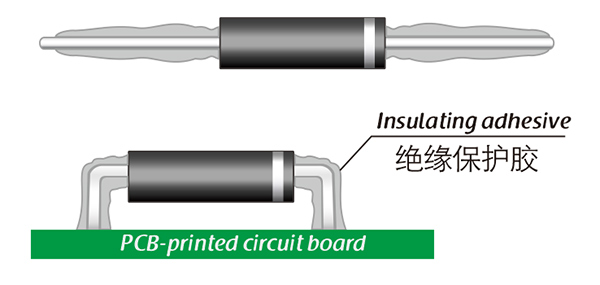
For high-voltage diodes used in exposed air, it is recommended to install them with insulated electrodes at both ends.


Common treatment methods for surface adhesive insulation:

Characteristics of insulation adhesive material:

1. Silicone material usually presents a transparent and elastic rubber state after curing, which is more effective in shock resistance and can also withstand severe stress changes caused by large high and low temperature changes (-40 ° C~200 ° C).

2. Acrylic materials typically exhibit a transparent and hard coating after curing, with low moisture absorption and fast curing time, as well as excellent wear resistance and insulation.

3. After curing, Urethane material usually presents a transparent and hard coating, which has superior wear resistance and good moisture resistance. Its performance is particularly stable in low temperature environments, but it is less resistant to high temperatures.

4. The coating material based on epoxy is very sturdy and usually opaque, with good moisture and moisture resistance. Its resistance to chemical corrosion and wear is also very good. In addition, epoxy also has good dielectric properties.

Here, suitable insulation adhesive materials can be selected based on the different usage situations of engineers.

HVDIODE - Suly Electronics Co., Ltd.

Expects To Provide You With Perfect Service

Name
Email *
Verification Code *
Verification Code
Leave a message
Name
Email *
Message
Verification Code *
Verification Code
We use Cookie to improve your online experience. By continuing browsing this website, we assume you agree our use of Cookie.